
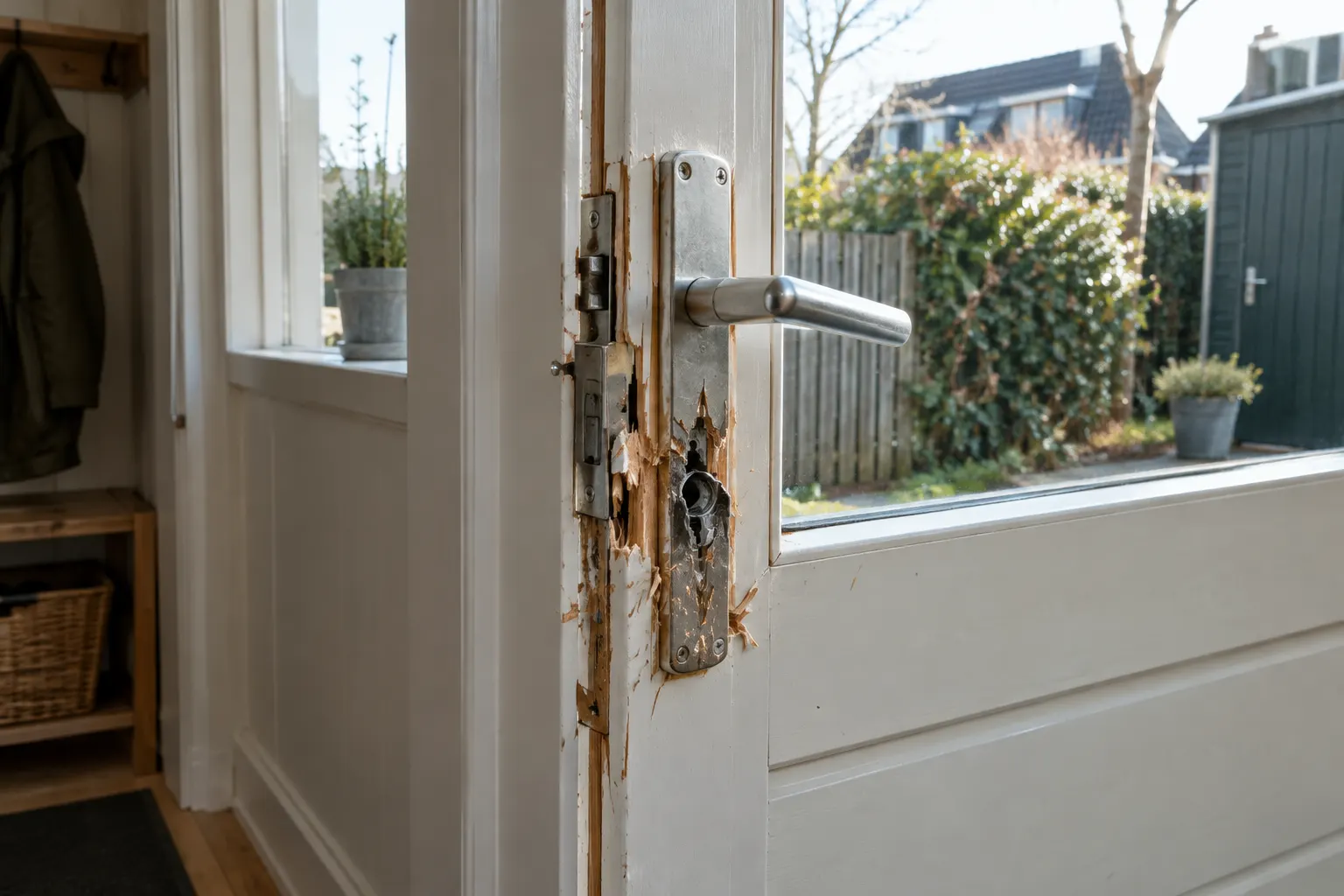
You have been burgled, what now? Steps for the first hour, day and week
Tips - 25 November 2026 · 5 min read

You have been burgled, what now? Steps for the first hour, day and week

If you think the offender is still inside or nearby, leave and call 112. If he has gone, call 0900-8844 to report it. Do not tidy up and touch as little as possible until you have spoken to the police. Then block stolen cards and SIM cards, secure camera footage and report the damage to your insurer.

You have been burgled, what now? Steps for the first hour, day and week
In this article
  • What do you do in the first hour?
  • Which cards, keys and accounts do you block at once?
  • How do you secure camera footage and alarm data?
  • What do you arrange on the first day?
  • What do you do in the week after?
  • How do you prevent a second burglary?
At a glance

In short

After a home burglary, the Dutch police come to your home to take the report and look for traces, according to politie.nl.
Report the damage to your contents or buildings insurer within a month, even if you are unsure about claiming.
Camera footage can be overwritten within days, so export it the same day.

What do you do in the first hour?

If a door is open that should be closed, do not walk in to look. Stay outside, go to the neighbours and call 112 if you suspect someone is still there. Do not shout and do not chase anyone. A laptop can be replaced.

If the house is empty, call 0900-8844. The police make an appointment to come round, take the report and look for traces. Leave the damage as it is until then. So no sweeping up glass, no closing drawers, no wiping door handles. Only walk where you really have to and keep children and pets out of the rooms.

Take photos of every room from the doorway. You will need them later for the report and the insurer, and a photo shows things you missed in the shock.

Which cards, keys and accounts do you block at once?

If bank cards or a credit card are gone, call the Bankpassen Meldcentrale on 0800-0313. From abroad the number is +31 88 38 55 372. If a phone was stolen, have your provider block the SIM card and lock the device remotely.

Then change the passwords of accounts that were open on a stolen laptop or tablet. Start with email, because it can be used to reset the rest. Think of your camera, alarm and smart lock apps too: remove the stolen device as a user.

If a set of keys is missing, the cylinder has to be replaced the same day. Do not pick the first advert in a panic. The Dutch Police Label Secure Housing (PKVW) explicitly warns about fraudsters who present themselves online as locksmiths. Ask your insurer or housing association who they send, or look for a PKVW company.

How do you secure camera footage and alarm data?

Do not unplug the recorder and do not reset anything to factory settings. Find the period and export generously: half an hour before and half an hour after. An offender who walks by to have a look often appears earlier than the burglary itself.

Compare the camera clock with your phone and write down the difference. If the camera runs eleven minutes slow, your whole account will otherwise be off. Also take a screenshot of your alarm log: time of arming, first detector, siren, disarming.

If the recorder itself was taken, check whether there are notifications with a photo on your phone or in the cloud. Ask neighbours whether they have anything, and ask them to keep the clip and give it to the police themselves.

What do you arrange on the first day?

Close the house up again. A temporary board over a pane or a temporary lock is possible after the police visit, but take photos of the break first and keep broken parts. The insurer may want to see them.

Make a list of what is gone: brand, type, serial number, year of purchase, and a receipt or bank statement. Serial numbers are often in order emails or on the box in the attic. If you registered items in the Stop Heling app, the police can link them to you sooner when they are found.

Then call the insurer. Victim Support Netherlands (Slachtofferhulp) advises reporting within a month, but do not wait for that. Ask which repairs you may have done without approval.

What do you do in the week after?

Add to your police report if you discover more is missing. That nearly always happens: a watch in a drawer, a camera in the attic. Pass it on with the number of your report and send the same addition to the insurer.

Keep an eye on how everyone at home is doing. Sleeping badly, being startled by noise and constantly checking whether the door is closed are common. Slachtofferhulp can be reached on 0900-0101 and advises seeing your GP if the symptoms have not eased after four weeks. Children can also be out of sorts for a while.

Do not put footage of the offender on social media. However understandable, it is not simply allowed and it can hinder the investigation.

How do you prevent a second burglary?

Start with the place where they got in. A door that was forced with a crowbar is solved with better door furniture and a sturdier frame. A camera above it changes nothing. Only when the weak spot is closed do electronics make sense.

Then look at how you could have known someone was there. If no alarm sounded because it was not armed, it is a habit and not a purchase. If it was armed but the notification did not arrive, have the detectors, the siren and the connection tested.

If the cameras had nothing usable, look at the images critically. Usually the camera is too high, faces a lamp or films the whole plot instead of the door. One well-aimed view of the route to your back door is worth more than four overviews of the garden.

Frequently asked questions

Can I report a home burglary online?

For a burglary in your home you call 0900-8844, so that traces can be looked for. For a shed, garage or storage room you cannot reach from inside the home, the police say you can report online.

Do I have to report it if nothing was stolen?

Yes, an attempt is a criminal offence too. There may be traces that match other cases, and for damage to a door or frame an insurer usually asks for a police report.

May I have the door repaired before the police arrive?

Preferably wait until you have spoken to the police. If the house really cannot be closed, say so on the phone and ask what you may do. Take photos first, close up and from a distance.

Does the insurance pay if the door was not locked?

That depends on your policy. Many policies set requirements about signs of forced entry or about locking up. Be honest about how it was and ask the insurer about the conditions.

Will I hear back from the police after my report?

When reporting, ask how and when you will be contacted, what your case number is and how to pass on additions. Slachtofferhulp can help you with questions about what follows.

Sources

What this information is based on

Dutch policeWhat to do after a burglary in your home (in Dutch).Burgled, what now, politie.nl
Victim Support NetherlandsReporting, blocking cards and help after a burglary (in Dutch).Help after a home burglary
Victim Support: insuranceReporting to the insurer within a month (in Dutch).Reporting damage to your insurer
Police Label Secure HousingWarning about locksmiths and advice after a burglary (in Dutch).PKVW for residents
Get help

Let us take a look

Send us your situation or call us directly. We help with cameras, alarms, the app and installation.

Request a quote
AddedView →