
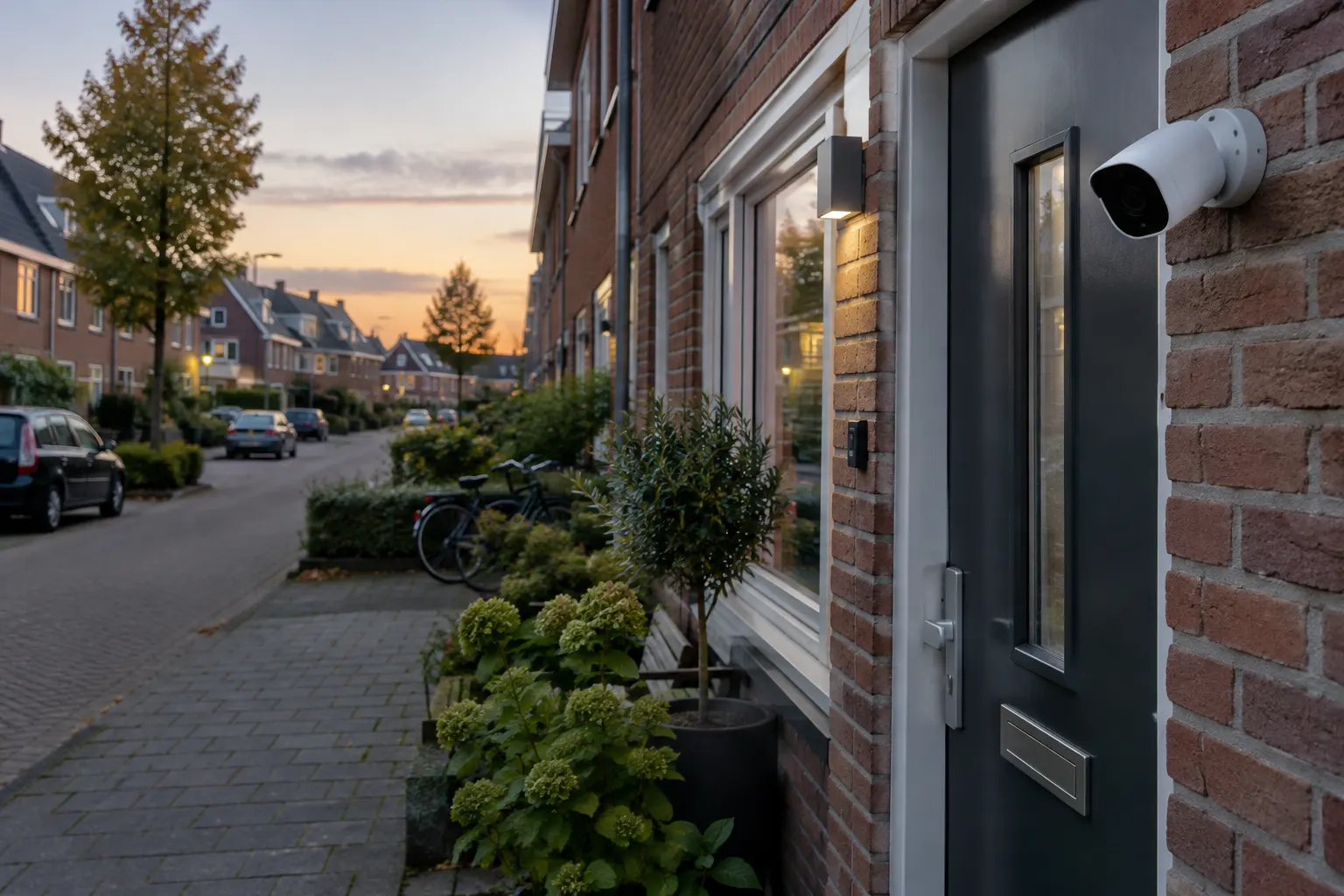
Registering a camera with the Dutch police: how does Camera in Beeld work?
Privacy - 25 November 2026 · 5 min read

Registering a camera with the Dutch police: how does Camera in Beeld work?

Registering your camera with the police in the Netherlands is voluntary and runs through Camera in Beeld. As a private individual you log in to Mijn Politie with DigiD, as a business you use the business form and your Chamber of Commerce number. The police do not watch live. They only see where a camera hangs and request footage afterwards if something has happened.

Registering a camera with the Dutch police: how does Camera in Beeld work?
In this article
  • What is Camera in Beeld, and what is it not?
  • How do you register a camera?
  • What happens to your details?
  • When can the police demand your footage?
  • Does the suspect see that the footage came from you?
  • Does registering allow you to film the street?
  • How to make your footage useful later
At a glance

In short

Private individuals register with DigiD through Mijn Politie, businesses with a separate form and their Chamber of Commerce number.
Footage can be demanded even if your camera is not registered, and you are then obliged to cooperate.
Anyone who hands over footage after a formal demand appears with name and camera location in the criminal file, which the suspect may read.

What is Camera in Beeld, and what is it not?

Camera in Beeld is a register. The police use it to record, street by street, which security cameras there are, who owns them and how long recordings are kept. After a burglary or robbery a detective does not have to try every door but knows whose bell to ring.

It is not a connection to your system. The police get no login, no live picture and no automatic copy. Nor does it bring you extra surveillance or faster help. If you see something suspicious happening now, simply call 112. For anything that is not urgent, call 0900-8844.

How do you register a camera?

Go to politie.nl, log in to Mijn Politie with DigiD at the top right and add your camera. Among other things you state where it hangs, whether the public road is in view and how long you keep recordings. Register outdoor cameras in particular. A camera in the living room helps nobody with an investigation in the street.

There is a separate form for a company, association or foundation. Have your Chamber of Commerce number ready and agree internally who the contact person is. A general mailbox nobody reads is a waste: after an incident every day counts, because old recordings are overwritten.

You receive a confirmation and after that an e-mail every year asking whether everything is still correct. If you do not respond to the reminders your registration is removed, the minister stated in 2023. The police deliberately do not include a link to click in that e-mail. If there is a login link in it, suspicion is justified.

What happens to your details?

Only staff who need the register for their work at the police or the Marechaussee can look in it. Your neighbours or other participants cannot see your registration. After logging in you can view, change and remove your own details.

Update the registration when you move, replace or sell a camera. A dummy camera may be included too. The police ask for this themselves, so that nobody comes asking for footage in vain after a burglary.

When can the police demand your footage?

There is a difference between asking and demanding. During a neighbourhood enquiry an officer may ask whether you saw anything. With a formal demand you must cooperate. The basis is article 126nda of the Dutch Code of Criminal Procedure. It requires suspicion of an offence for which pre-trial detention is possible. Broadly, those are offences punishable by four years in prison or more, such as street robbery or sexual violence.

An investigating officer may make the demand verbally. He must then give it to you in writing within three days. So feel free to ask for it, note the name and hand over only the period and cameras requested. Deliberate refusal is a criminal offence. If you are the suspect yourself, such a demand may not be addressed to you.

This applies to every camera, registered or not. Staying out of the register does not protect you from a demand. At most it means the police find you later.

Does the suspect see that the footage came from you?

Yes, you should take that into account. After a demand, the criminal file states who supplied the footage and where the camera hangs. The suspect and his lawyer can read that file. This is true for registered cameras and just as much after a neighbourhood enquiry.

If that worries you, for instance because you know the suspect, tell the officer or detective before you hand over the footage. Ask what is possible. The Dutch data protection authority also mentions this risk in its guidance for camera owners.

Does registering allow you to film the street?

No. Registration is not a permit. The privacy rules stay exactly the same: aim at your own property and only show public road where there is really no alternative. Anyone who thinks a wide street view helps the police is simply breaching the GDPR.

Also watch the retention period you enter. In March 2026 Omroep Gelderland and NOS showed that one in three registered private cameras filming the public road keeps footage longer than 28 days. That is the upper limit the police themselves use for the register. Shorter is nearly always easier to justify.

How to make your footage useful later

Check twice a year that the date and time of the recorder are correct, because an hour’s difference can send an investigation the wrong way. Look at the night picture too and make a trial export to a USB stick. Many people only discover after a burglary that they do not know how.

If something has happened, secure the clip straight away in its original format. Do not film the screen with your phone. This article offers general information. If you receive a demand you have doubts about, ask a lawyer for advice.

Frequently asked questions

Is registering my camera compulsory?

No, taking part in Camera in Beeld is voluntary for residents and businesses. You can also register your camera later or have your registration removed again.

Can I register a video doorbell?

Yes. The same rules apply to a doorbell with a camera as to an ordinary security camera. According to NOS there were more than 350,000 doorbell cameras in the register in March 2026.

What if my footage has already been overwritten?

Then say so honestly. You cannot hand over what no longer exists, and you do not need to choose a longer retention period for that reason. Just do not delete anything once footage has been requested.

Must I tell the people filmed that the police have the recording?

According to the Dutch data protection authority you do not have to do so when footage is demanded. It does advise you to check for yourself whether that holds in your situation.

What do I do with my registration when I move house?

Log in to Mijn Politie, remove the camera at the old address and register it again at the new one. Businesses report the change using the business form.

Sources

What this information is based on

Camera in Beeld, frequently asked questionsOn registering, access, demands and the criminal file (Dutch).Dutch police
Cameras at your own homeRules that also apply if your camera is registered (Dutch).Dutch data protection authority
Minister’s answer on Camera in BeeldParliamentary questions 2023-2024, no. 286, on demands and registration (Dutch).Official announcements
Retention periods in the police registerNOS and Omroep Gelderland, 12 March 2026 (Dutch).NOS
Get help

Let us take a look

Send us your situation or call us directly. We help with cameras, alarms, the app and installation.

Request a quote
AddedView →