
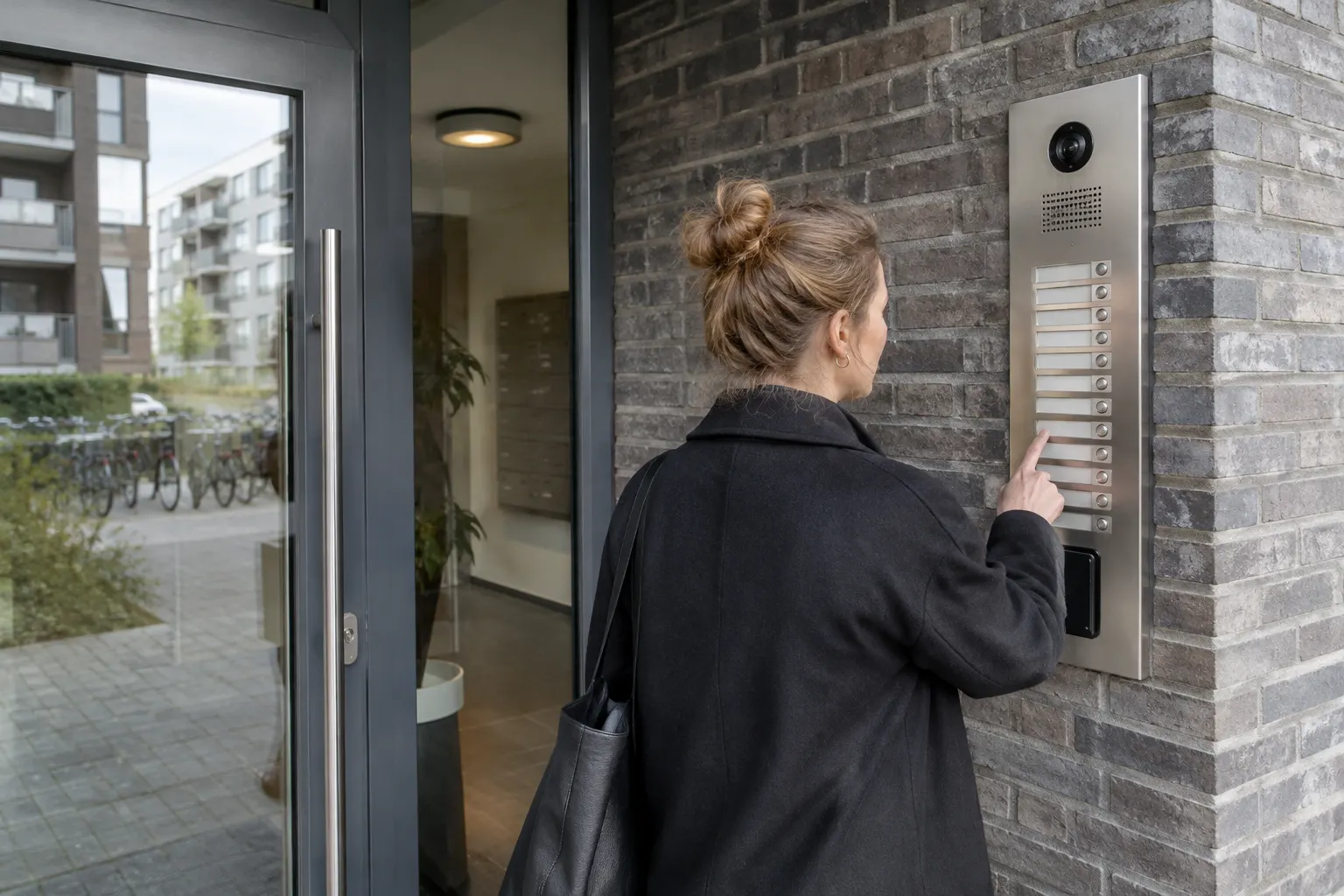
Replacing the intercom as a Dutch owners’ association: what does the board need to arrange?
Advice - 25 November 2026 · 6 min read

Replacing the intercom as a Dutch owners’ association: what does the board need to arrange?

If an owners’ association (VvE) wants to replace the intercom, the work runs in six steps: read the deed of division, survey the installation, ask for comparable quotes, vote in the members’ meeting, schedule each home and hand over with an administrator. The intercom is usually communal, so the indoor unit in the flat often is too. Your own deed always decides.

Replacing the intercom as a Dutch owners’ association: what does the board need to arrange?
In this article
  • Step 1: who actually owns the intercom?
  • Step 2: what should you record in the building beforehand?
  • Step 3: how do you get quotes you can compare?
  • Step 4: which majority do you need at the members’ meeting?
  • Step 5: who pays what, and where does the money come from?
  • Step 6: how do you schedule the homes and the handover?
At a glance

In short

In the 2017 Dutch model regulations the intercom is communal, including the part that hangs inside the home.
For commitments above 5,000 euros that model asks for a two-thirds majority, unless the meeting set another threshold.
Under that model the invitation to the members’ meeting must go out at least fifteen days ahead, with the documents attached.

Step 1: who actually owns the intercom?

Start with the deed of division and the model regulations it refers to. There are five versions, from 1973 up to 2017, and the deed may depart from them. The 2017 model lists the doorbell and door-opening installation among the communal items, with intercom and video phone included. It states explicitly that this also applies to the part inside the private area.

If the indoor unit is communal, the association pays for it and a resident may not swap it for something else on their own initiative. If your deed says otherwise, the whole division of costs changes.

In 2022 such a question reached the court of appeal in Den Bosch. An owner challenged the decision to replace the intercom with a video phone. The court did not agree: under those regulations the intercom was communal, and the fact that a new device can do more than the old one did not make the decision invalid.

Step 2: what should you record in the building beforehand?

Make a list an installer can calculate with: number of homes, number of entrances, doors to storage or garage, the type of outdoor panel, the location of the power supply and the kind of electric strike. Photograph the inside of the outdoor panel, the cabinet with the power supply and the back of at least three indoor units on different floors.

Also write down what residents miss. For example a bell that is too quiet or no unit near the bedroom. Note at once who cannot be at home during the day.

Cabling often matters more than the brand. If each home has enough cores, a new system may fit. If new cable has to go through the riser, both the price and the disruption change. Have that measured before you compare.

Step 3: how do you get quotes you can compare?

Give every party the same one-page document. It lists the number of units, the functions you want, the doors that should be included, who repairs the plaster, when work is allowed and what happens to the old equipment. Ask for a price per home, a separate amount for the main entrance and an allowance for cable that turns out to be unusable.

Ask three things that rarely appear in a quote unprompted. Are the app and the management portal free or do they cost something each year? Who becomes the owner of the administrator accounts? And what does it cost if a home is out on the second round as well?

Pay attention to the camera in the outdoor panel. Ask whether footage is stored, who can see it and whether you can switch that storage off. An association that records visitors has to deal with the privacy rules.

Step 4: which majority do you need at the members’ meeting?

In the 2017 model the main rule is an absolute majority: more than half of the votes cast. For a number of decisions the bar is higher. Two thirds of the votes are needed for spending from the reserve fund that is not in the adopted maintenance plan, for a new installation that does not follow from maintenance, and for commitments above 5,000 euros or the amount your own meeting chose.

For such a decision at least two thirds of all votes must also be present or represented. If that fails, you call a second meeting, not earlier than fifteen days and not later than six weeks after the first. There the number of people attending no longer counts, but those two thirds of the votes cast are still required.

Put one clear question in the proposal, the maximum amount, where the money comes from and who gives the board authority to place the order. Collect proxies in good time, because without enough people present you have no valid decision.

Step 5: who pays what, and where does the money come from?

An owners’ association must save for major maintenance. According to the Dutch government that can be based on a long-term maintenance plan or on at least 0.5 per cent of the rebuild value each year. If the intercom is already in that plan, paying from the reserve fund is easier to arrange. Otherwise you include it at the next revision.

In principle the costs are divided by the shares in the deed. A worked example with invented amounts: if the project costs 12,000 euros and your share is 25/1000, 300 euros falls to you. If one resident wants a second indoor unit or a larger screen, agree that they pay the difference themselves.

If there is too little money, the meeting also decides on the extra contribution. Under the 2017 model such a decision may only be carried out once the association has the money it needs.

Step 6: how do you schedule the homes and the handover?

Work with time slots per floor and also hang the list in the hallway. Plan a second round from the start for anyone who was out. Agree what happens if a resident gives no access: under the 2017 model owners must cooperate with a decision, but start with a conversation.

Hand over per address with a checklist: does the right bell ring, is speech clear, does the door open, is the name correct. A home without a tick goes on the snag list and not on the final invoice. Also test whether the door falls into the lock properly by itself.

Finally, appoint two administrators and keep passwords, drawing, serial numbers and a list of names in the association’s records. Set down who processes a move.

Frequently asked questions

May a resident refuse entry to the engineer?

In the 2017 model every owner must cooperate in carrying out a decision of the meeting. If damage occurs, the association compensates it. Check whether your own regulations say the same.

Who do you make agreements with if a home is rented out?

That runs through the owner or landlord. Do include tenants in the schedule and the explanation, because they open the door.

How long does such a project take on average?

There is no fixed period to give. The notice period, a possible second meeting and delivery time set the pace, so start well before the old installation fails.

May the board order a whole new installation straight away after a fault?

Under the 2017 model the board can arrange small maintenance within the budget itself. A complete replacement is usually a decision of the meeting. So ask for a repair price first to buy time.

Is this plan legal advice?

No, it is general information based on the 2017 Dutch model regulations. Your deed may differ. If you have doubts about votes or costs, have the deed read by the property manager, a notary or a specialist lawyer.

Sources

What this information is based on

2017 model regulationsArticles 11, 14, 50, 54 and 56 on communal items, reserve fund and voting.2017 model regulations (pdf, Dutch)
Dutch government on the reserve fundHow much an association must reserve for major maintenance.Rijksoverheid: reserves for associations
Ruling on intercom and video phoneDiscussion of ECLI:NL:GHSHE:2022:2869.Discussion of the ruling
Knowledge base on intercom costsHow costs are divided under the model regulations.vve.nl on the intercom
Get help

Let us take a look

Send us your situation or call us directly. We help with cameras, alarms, the app and installation.

Request a quote
AddedView →