
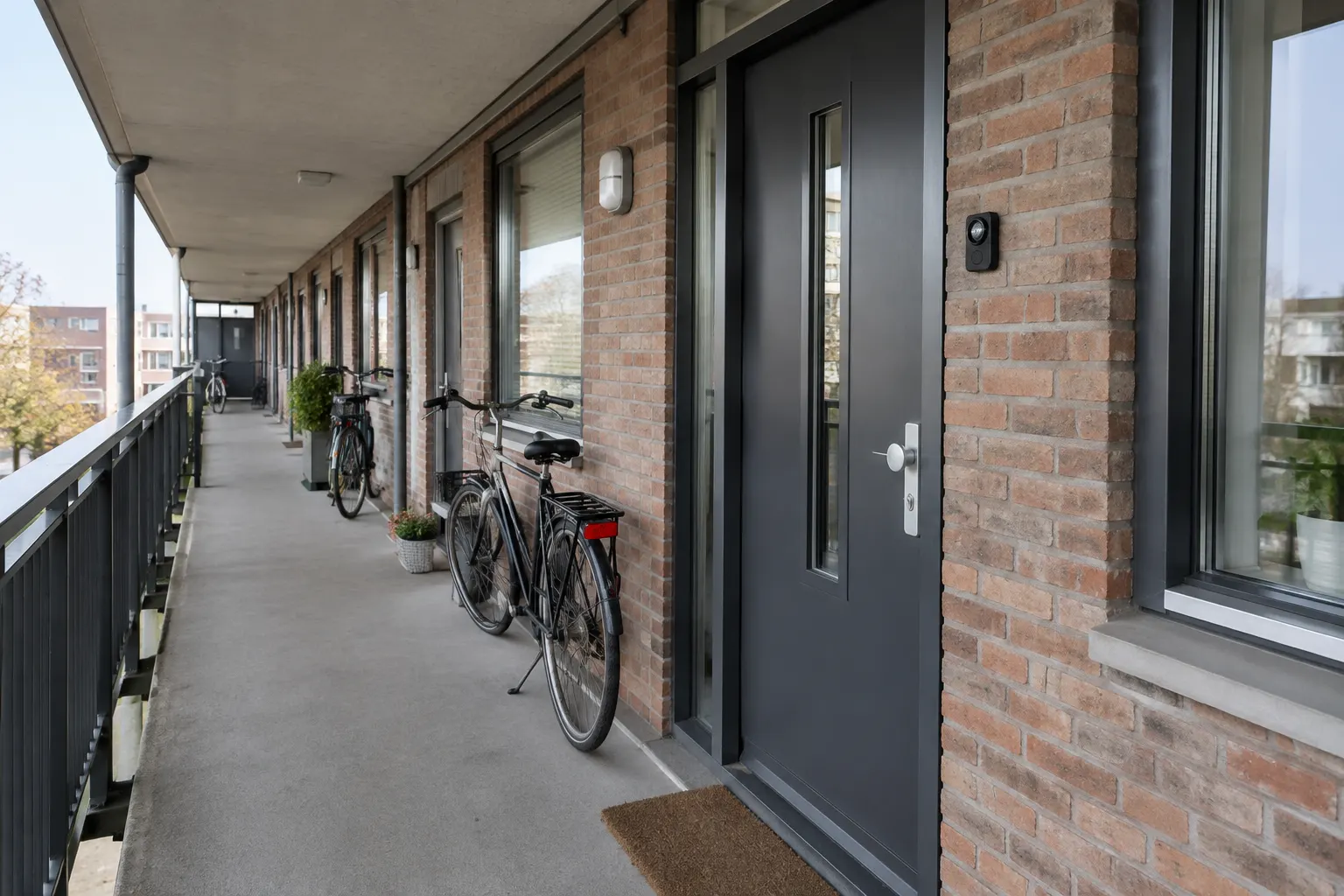
Can you put up a camera or video doorbell at a rented home?
Privacy - 25 November 2026 · 5 min read

Can you put up a camera or video doorbell at a rented home?

Placing a camera inside your own rented home is usually fine without asking. Outside is different: for the wall, window frame, gallery or stairwell your lease can be stricter than the law. Ask for written permission first. Privacy rules apply as well: you only film what is yours.

Can you put up a camera or video doorbell at a rented home?
In this article
  • What does Dutch law say about cameras in a rented home?
  • What do housing associations ask of tenants?
  • How do you ask your landlord for permission?
  • What can you put up without drilling?
  • What about the gallery and the stairwell?
  • What do you have to do when you move out?
At a glance

In short

Under article 7:215 of the Dutch Civil Code you may make changes that can be undone without significant cost, but for the exterior your lease may deviate from that.
A landlord of residential property has to decide on a request within eight weeks.
Some housing associations ban a video doorbell on a gallery or in a stairwell, others simply allow it.

What does Dutch law say about cameras in a rented home?

There is no separate camera law for tenants. The basis is article 7:215 of the Dutch Civil Code. You need written consent for a change to the rented property, unless you can undo it at the end of the tenancy without significant cost. The Dutch government gives holes in a wall that you fill in later as an example of such a small change.

A camera on a bookshelf or a bracket with two screws in the hallway wall fits that description. A hole straight through the outer wall, trunking along the brickwork or a cut-out in a uPVC frame is another matter. You cannot repair a window frame with a dab of filler.

Note the last paragraph of that article. For the interior, a lease may not deviate from these rules to the tenant’s disadvantage. For the exterior it may. So read your tenancy conditions first and the law second. This article is general information and does not replace legal advice about your lease.

What do housing associations ask of tenants?

The differences are large. Staedion in The Hague wants you to ask permission beforehand for a camera as well as for a smart doorbell. The camera may not be fixed to the wall, roof or shed, the frame must stay intact, and a smart doorbell is not allowed on a gallery or in a stairwell. Motion detection and storing footage are not allowed there either.

Student housing provider DUWO prohibits fixing anything to the outside and filming galleries, stairwells and the street. At deltaWonen in Zwolle, video doorbells are permitted. The rules really do differ per landlord. Ask for them before you buy anything.

The lesson: do not go by what a neighbour in another district may do. Search your own landlord’s website for camera, doorbell or tenant alterations.

How do you ask your landlord for permission?

Send an email and make it easy for the landlord to say yes. Include a photo of the spot, the camera model, how you will fix it, where the power comes from and a screenshot of what you will see. Add what you will do when you move out.

By law, a landlord of residential property must give consent within eight weeks if the change does not harm lettability and does not lower the value of the home. If you get a refusal, you can ask the court for authorisation. For a doorbell costing a few hundred euros that is rarely sensible. A second proposal without drilling works faster.

If you rent a flat from a private owner, also ask whether there is an owners’ association. The outer wall and the gallery are often shared property, and then a yes from your landlord is not always enough.

What can you put up without drilling?

The easiest spot is inside. Place a camera in your hallway with the front door in view. You see who comes in, nothing is attached to the building and no passers-by walk through your recording. Filming outwards through a window works less well: the infrared LEDs reflect in the glass at night and you mainly see a white patch.

For the door there are battery doorbells with a clamp that fits over the door leaf or frame. Measure the thickness of the door before ordering and check that the door still closes without squashing the seals. Adhesive strips hold poorly on rough brick or powder coating, and a doorbell that drops from a gallery is dangerous. Always check whether the manufacturer lists adhesive as a fixing method.

Do not forget the option without a lens. A wireless contact on the front door and a motion detector in the hall warn you just as well and nobody feels watched. For a gallery flat that is often the calmest choice.

What about the gallery and the stairwell?

This is where tenancy law and privacy collide. According to the Dutch Data Protection Authority (AP), a camera at your own home may only film your own property. On a gallery, everyone living further along has to walk through the picture, several times a day. That is different from a visitor entering your front garden.

If your landlord allows it and you still want a doorbell, set it so that it only shows video when someone rings. Turn off motion recording and audio recording, zoom in on your own doormat and mask the rest. A sticker next to the bell is part of it.

Talk to the neighbours first. Show them on your phone what is in view. DUWO receives reports from tenants who feel watched, and being clear beforehand prevents much of that.

What do you have to do when you move out?

Remove the camera and make good. If there was an inventory of the condition at the start, the Juridisch Loket legal helpdesk says you return the home in that state. If it lists white walls without holes, fill your screw holes and touch them up.

Also remove the camera from your account and erase its memory. Otherwise the next owner of the device may not be able to look inside your home, but could find your old recordings.

Frequently asked questions

Can my landlord demand that I remove a camera?

Yes, if you breach your tenancy conditions or demonstrably affect your neighbours’ privacy. You often get the chance to adjust the camera first. Reply in writing and keep photos of the spot and the image.

Is a verbal promise from the caretaker enough?

No, that is of little use if a complaint comes later. The law speaks of written consent. A short email with a clear approval from the landlord is already useful.

May I put up a dummy camera if a real one is not allowed?

The GDPR rules do not apply to a dummy camera because you film nothing. If you attach it to the building, the tenancy conditions still do. Neighbours may feel just as watched by it.

May I put a camera in a shared student house?

In your own room you can, as long as visitors know about it. In a shared kitchen or hallway you film housemates in their daily lives. Do not do that on your own initiative, but agree it with everyone and ask the landlord.

Sources

What this information is based on

Article 7:215 Dutch Civil CodeThe legal text on changes made by the tenant (in Dutch).Article 7:215 on Wetboek+
Dutch governmentSmall changes, consent and the eight-week period (in Dutch).May I alter my rented home?
StaedionExample of a housing association’s camera and doorbell conditions (in Dutch).Camera conditions (pdf)
Dutch Data Protection AuthorityThe rules for cameras at your own home (in Dutch).AP on cameras at home
Get help

Let us take a look

Send us your situation or call us directly. We help with cameras, alarms, the app and installation.

Request a quote
AddedView →