
Alarm response: who comes when the alarm goes off?
Alarms - 25 November 2026 · 5 min read

Alarm response: who comes when the alarm goes off?

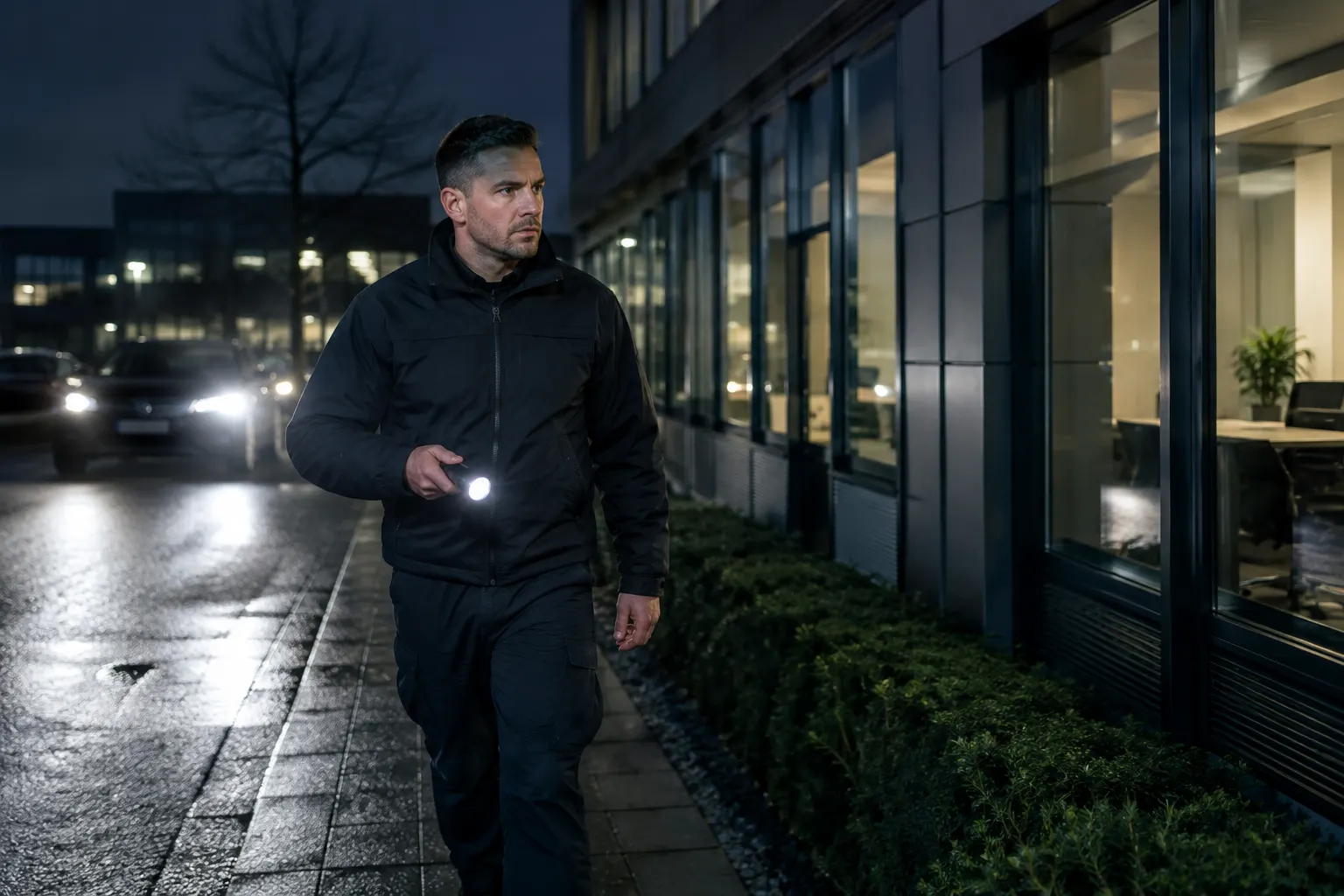
Alarm response is what happens after the alarm has gone off. Without a monitoring station you react yourself or ask the neighbours. With one, an operator calls your keyholders or sends a guard. The police respond with priority once it has been established that it is not a false alarm.

Alarm response: who comes when the alarm goes off?
In this article
  • Will the police come when my alarm goes off?
  • What if I handle the alert myself?
  • What can you expect from neighbours?
  • What exactly does a monitoring station do?
  • When does a security guard come?
  • Is a hold-up button different from a burglar alarm?
  • Which response suits you?
At a glance

In short

For monitoring level RE2 the VRKI asks for at least three keyholders.
From monitoring level RE2 upwards, the VRKI assumes a response within 15 minutes at most.
A verified alarm gets priority 1 from the police, through a person on site or technology.

Will the police come when my alarm goes off?

Not automatically. Your alarm does not call the police and neither does the app. Often nothing is wrong: a branch, a pet, someone who forgot the code. So someone or something first has to confirm that something is really happening. That is called alarm verification.

The VRKI, the guideline used by Dutch insurers and security companies, has two methods. With personal verification a keyholder or guard goes to look. With technical verification it happens remotely, for example with images. In both cases a confirmed alarm gets priority 1 from the police according to that guideline.

One route is always open. If you, a neighbour or a passer-by sees a burglary happening, call 112. Then there is a witness and nobody needs to verify anything.

What if I handle the alert myself?

For many homes this is the normal choice. You get an alert, open the app and see which detector it was. With a photo detector or camera you see within seconds whether it is the cat. For its photo detectors Ajax mentions a first photo within 9 seconds with a good signal.

The weak spot is you. You are asleep, on a plane or your phone is on silent. The VRKI puts it plainly: there is no guarantee that the message reaches the recipient in time. So let the app’s alarm alerts through silent mode and give at least two other people access.

Do not go in yourself if you suspect someone is still there. Keep your distance, call 112 and pass on what you see: how many people, which way they go, a number plate. That is worth more than a confrontation in the hall.

What can you expect from neighbours?

Neighbours are quick and know your house. But a siren alone makes few people move, certainly not the third time. So agree on something a person can really do: look from the street whether a door is open, and call you.

Give them a key and their own code or tag so they can disarm afterwards. Their own code means you see in the log who it was. Also say what you do not ask for. Nobody has to walk into a dark garden for your television.

Check once a year that everybody still has the same number. A list with a neighbour who has moved away is no response plan.

What exactly does a monitoring station do?

In the Netherlands it is called a PAC, a private alarm centre. Staff there receive signals from connected systems day and night. It is regulated work: the Dutch rules for security organisations require a certificate from an accredited body and set training requirements for the operators.

The operator follows an agreement you confirmed beforehand. With a burglary alert without technical verification, they call the keyholders. In the VRKI that is level RE2: at least three people on the list, reachable and able to establish whether it is real, with a response within 15 minutes as the starting point. If one of them suspects a crime, they report it to the station or call 112.

A monitoring station also sees what you miss. A flat battery, a line that drops, a system that has been silent all day. Do ask whether those fault signals are in the contract, because that is not the same in every package.

When does a security guard come?

Then you have alarm response by a security company. That company has a key, drives to your property, does a round and calls. In the VRKI that is level RE3. The company must be licensed by the Dutch Ministry of Justice and Security and has an ND number. Ask for it.

For a business that is empty at night this often makes more sense than an owner getting out of bed at four. For a home it is mainly useful if you are away a lot or if the insurer asks for it. Mind the cost per visit, and what happens if the guard finds an open door: who then stays with the property?

There is an alternative. The guideline allows you to choose keyholders plus technical verification instead of a guard. With images the monitoring station can assess, you then also get priority 1.

Is a hold-up button different from a burglar alarm?

Yes. A hold-up button usually triggers silently, because someone is standing next to you. That signal does not go straight to the police. Since 1 July 2021, according to the Dutch police, the alarm centre must verify it first. How that works is agreed with the centre beforehand and put on record.

So do not fit a button under the counter without arranging what it does. A shopkeeper who thinks that pressing it equals a police car will be disappointed. According to the police, verification with images is quick and inconspicuous.

Which response suits you?

If you can nearly always be reached and live among people who know each other, handling it yourself with images is a fine start. If you travel a lot or own things your insurer asks about, choose a monitoring station with keyholders. With an empty business property holding valuable stock, you soon arrive at a guard or technical verification.

In any case, start by asking your insurer. They sometimes determine the level, and choosing afterwards is expensive. This article gives general information about the situation in the Netherlands; for your policy or property the written agreements count.

Frequently asked questions

Can I connect any alarm system to a monitoring station?

Technically the system has to speak that station’s protocol, and the station may set requirements for installation and maintenance. Ask with make and model at hand before you sign a contract.

What happens with too many false alarms?

That is in your contract. You often pay per alert above a certain number or per visit. More important is that people stop taking your alert seriously. So have a detector that gives two false alarms checked instead of switching it off.

How many keyholders do I need?

For connection at monitoring level RE2 the VRKI mentions at least three. Choose people who live nearby, answer their phone at night and do not go on holiday with you.

Can the monitoring station watch my cameras?

Only if you arrange it and the station supports your system. Put on record when they may look, for example only after an alarm. Indoor cameras need extra care because of privacy.

Sources

What this information is based on

VRKI 2.0 part B, version 2026 (Dutch)Chapter 8: alarm verification and levels RE1 to RE4.Go to VRKI part B (pdf)
Dutch police: role of an alarm centre in a robberyVerification of hold-up alarms since 1 July 2021.Go to politie.nl
Dutch regulation on private security organisationsArticle 20: requirements for private alarm centres.Go to wetten.overheid.nl
Ajax Hub 2Photo verification and the stated 9 seconds.Go to Ajax Hub 2
Get help

Let us take a look

Send us your situation or call us directly. We help with cameras, alarms, the app and installation.

Request a quote
AddedView →