
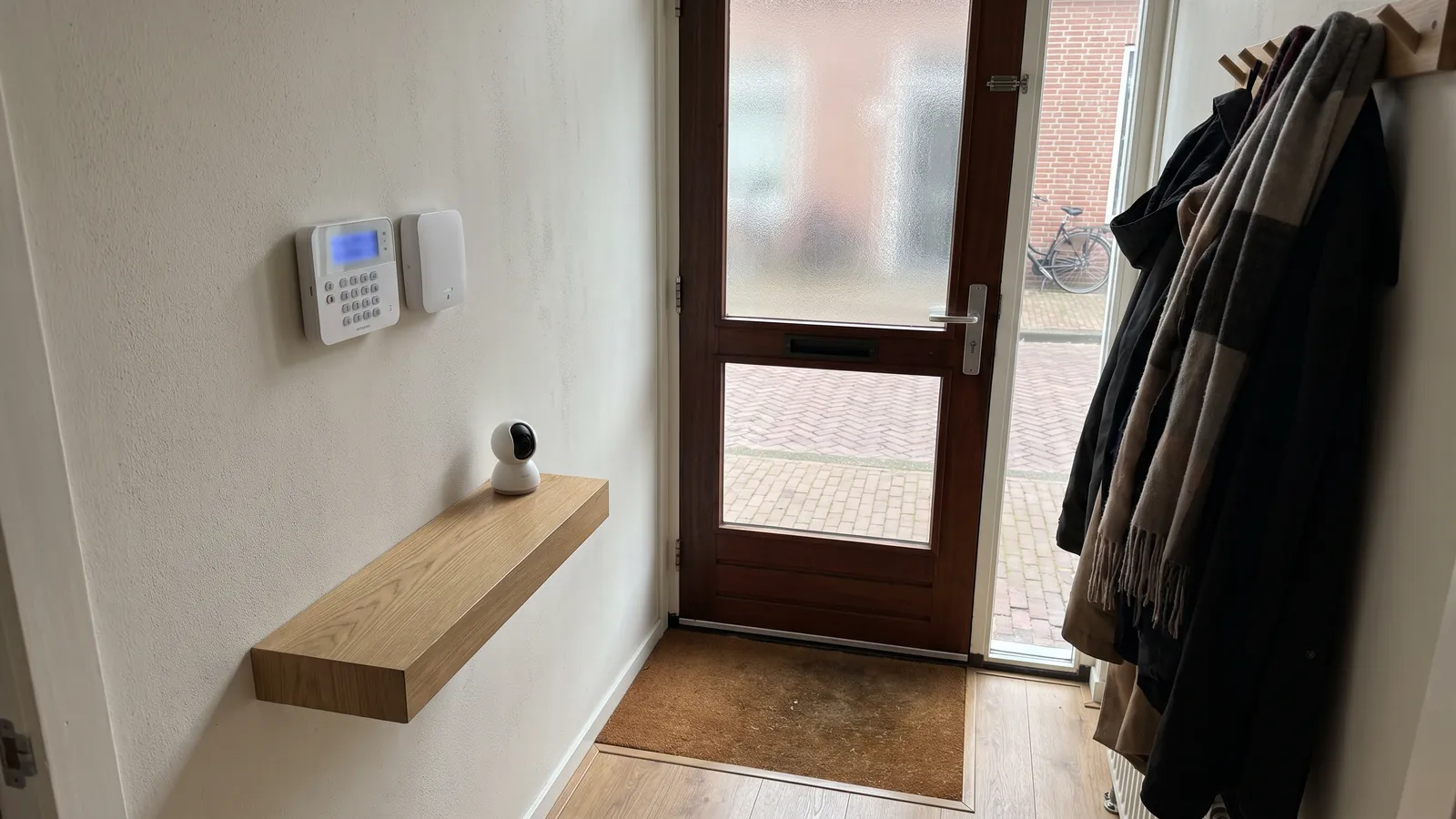
Company hall

alarm · Company hall

Alarm with camera: fixing a malfunction for a company hall

Alarm with camera: fixing a malfunction for a company hall. Fixing a malfunction focuses on alarm zones, camera coverage, time synchronization and verification.

IP Camera Installatie: More than 2,000 businesses helped. View our projects · Read customer reviews

Fixed price in advance Our own technicians 085 - 02 12 771
Alarm with camera for a company hall
Home›Solutions›Alarm with camera›Company hall

Investigate the fault

Fixing a malfunction tailored to a company hall

Fixing a malfunction for a company hall starts with the parts that need to change. Alarm with camera links a detection message to a live image, so that a user or follow-up can assess the situation.

The interior, exterior shell and technical access require a single coherent plan. We include cable distances, network capacity and scalable storage in the assessment and agree on the work with entrepreneur and facility management.

What we check and deliver

  • Activate a test in the intended detection zone.
  • Look for the accompanying camera fragment.
  • Check time and access rights in both systems.
  • Independent systems working side by side are not automatically technically integrated.
  • Agree on the work with entrepreneur and facility management.
01

Which observation helps to find the cause? · Company hall

Fixing a malfunction focuses on alarm zones, camera coverage, time synchronization and verification. Note when the problem started, which components were affected, and what changed shortly before that. Check the chain in sections and record where the operation is still present. Repeat the situation in which the error occurred after repair; a restart alone without a follow-up test provides insufficient certainty. We complete the check against a test event whose alarm and associated image are found by the authorized user.

02

Does the camera show where the detector gives a notification?

Compare the detection zone with the actual camera image. A report of a side door is of little value if only the front facade is visible. Equal zone names and a correct clock help to locate the report and recording. Whether automatic linkage is possible depends on the chosen devices. Alarm zones, camera positions, time, network and user rights must describe the same reality. For a company hall, we assess cable distances, network capacity and scalable storage. The key question at this stage is: Which observation helps to find the cause?

03

How we check alarm with camera

Activate a test in the intended detection zone. Look for the accompanying camera fragment. Check time and access rights in both systems. The fault will be repaired or you will receive a substantiated replacement advice if repair is not worthwhile. At a company hall, we check the result with entrepreneur and facility management and confirm how maintenance should be able to occur without stopping production. We record which functions were tested and any remaining limitations.

04

Fixing a malfunction at a company hall

Discuss production, fabric, vibrations, and accessibility before execution. A suitable workspace and a time when machines are not in the way can determine the planning. Record which zones can be tested separately without interrupting the entire process. For fixing a malfunction, we first discuss cable distances, network capacity and scalable storage with entrepreneur and facility management. We isolate whether the fault is in the power supply, cabling, network, equipment, account or setting. A coupling is only useful when the camera actually sees the area of the relevant detector. We also consider how maintenance should be able to occur without stopping production.

05

Preparing alarm with camera

Provide alarm and camera models, the names of the zones, and the desired tracking. Indicate whether the goal is just to monitor or a supported technical connection. For a company hall, we arrange access with entrepreneur and facility management. Note when the problem started, which components were affected, and what changed shortly before that. Check the chain in sections and record where the operation is still present. Repeat the situation in which the error occurred after repair; a restart alone without a follow-up test provides insufficient certainty. Explain cable distances, network capacity and scalable storage in advance. Send photos of the equipment and connections without showing access codes.

06

Decisions before fixing a malfunction

Independent systems working side by side are not automatically technically integrated. A picture that does not cover the detector zone requires a different camera position. We collect error images and system data remotely; on site we measure and test further in a targeted manner. The choice must suit this situation: The interior, exterior shell and technical access require a single coherent plan. The fault will be repaired or you will receive a substantiated replacement advice if repair is not worthwhile.

Our process

From the reported fault to a verified repair.

  1. 1

    Assess

    cable distances, network capacity and scalable storage

  2. 2

    Carry out

    We collect error images and system data remotely; on site we measure and test further in a targeted manner.

  3. 3

    Hand over

    The fault will be repaired or you will receive a substantiated replacement advice if repair is not worthwhile.

Clear answers

Frequently asked questions

What should I provide for alarm with camera at a company hall?

Provide alarm and camera models, the names of the zones, and the desired tracking. Indicate whether the goal is just to monitor or a supported technical connection. Tell us that your request concerns fixing a malfunction at a company hall. This helps the technician decide what else is needed before an appointment and proposal.

How do you assess fixing a malfunction?

A coupling is only useful when the camera actually sees the area of the relevant detector. We assess the equipment already in place, record any issues and discuss additional work before carrying it out.

Can existing equipment continue to work with fixing a malfunction?

Independent systems working side by side are not automatically technically integrated. We check each component. Send the model details and a description of the existing connection; without these we cannot establish compatibility or the scope of work.

When is the work at a company hall complete?

Opening notifications provides the correct view and both systems remain separately usable and manageable. We also confirm that maintenance should be able to occur without stopping production. You receive an explanation of the tested functions and any limitations. We discuss additional repairs separately.

AddedView →