
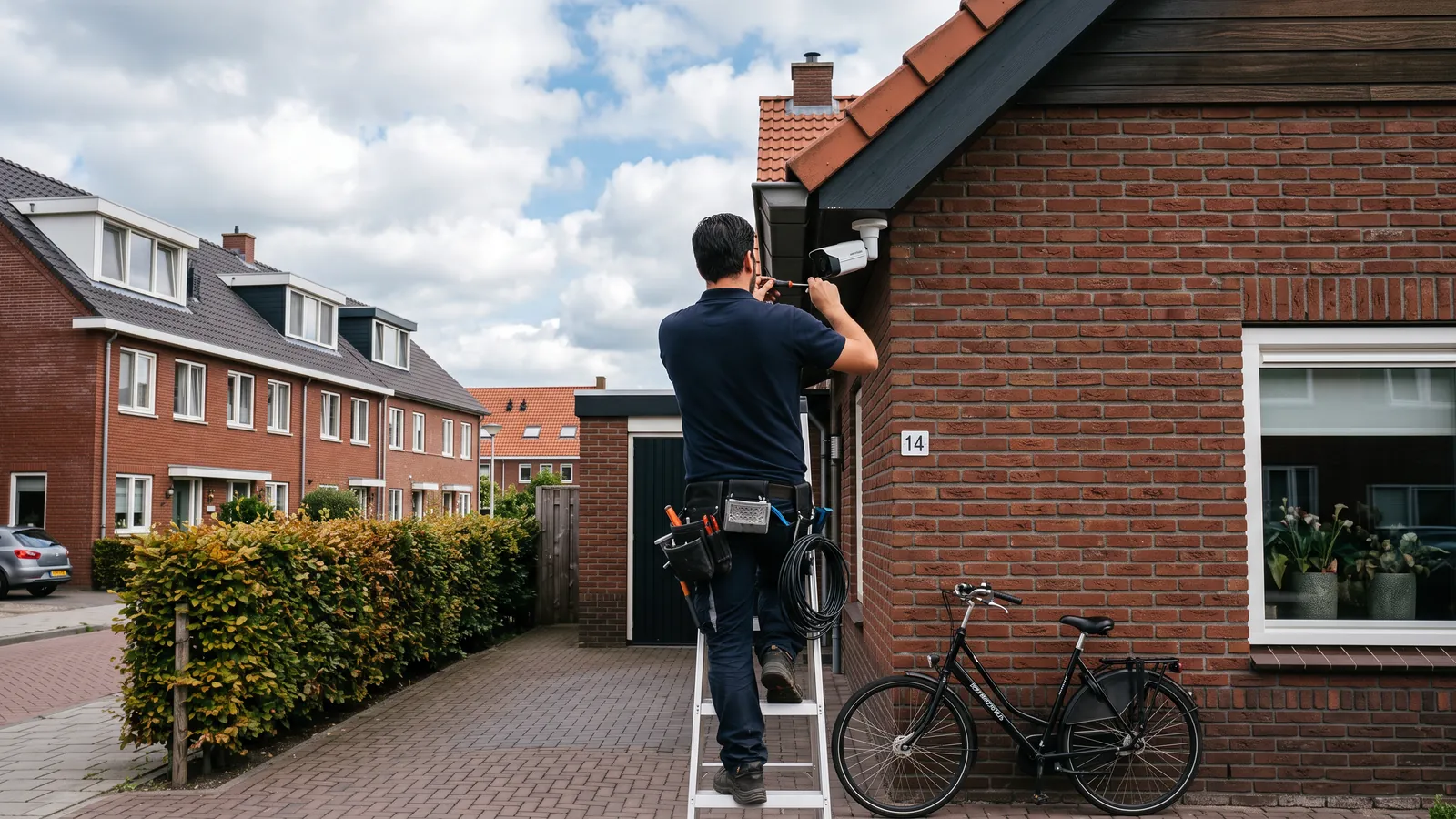
Mounting camera in a narrow alley
advice

Mounting camera in a narrow alley

A narrow alley mainly requires a usable view along a long-stretched walkway. A very wide view angle can show many walls and little detail at a distance. Therefore, be sure to determine which point of the passage you actually want to capture.

Mounting camera in a narrow alley

Choose the decisive point on the route

Is it important to see who enters, stops at a door, or passes a gate? Mark that point and let someone walk there. A overview of the entire alley and detail at the end are different recording goals. Sometimes that requires a different lens or a second perspective.

Check how walls frame the image

Check whether the facade next to the camera or a neighboring wall dominates the frame. Try the position before the camera is mounted. A small change in angle can make a significant difference in a narrow passage. Also assess an open door, excellent gutter, or other fixed obstruction.

Test two people and ordinary obstacles

A single test subject in an empty alley does not provide the full picture. Check whether someone is being shielded by a second person, bicycle, or container in the normal location. This makes it visible where the viewpoint has boundaries and which part of the route requires separate attention.

View reflection after dark

Surfaces located close to the camera may reflect night lighting. Compare a shot at the main point with the brightness near the camera. Do not let a white wall in the foreground be the only detail that is clearly visible. Request a test with the usual outdoor lights.

Keep the framework goal-oriented

Discuss which parts of the surroundings are not necessary for passage and assess the shielding where appropriate. Maintain the chosen position and a test segment. Check the sightline again when residents or users move bicycle racks, containers, or other obstacles.

Frequently asked questions

Is the widest lens best for a narrow alley?

Not automatically. The required distance and the important point determine which viewing angle is appropriate.

Can one camera give the entire route and a recognizable detail at the end?

This must be evaluated with a sample image. A single viewpoint may have limitations.

AddedView →