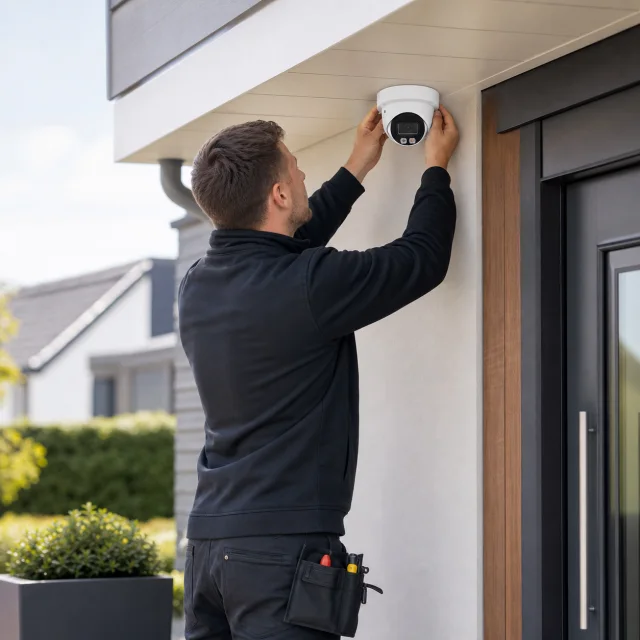
01Decisions before rent temporary security
A extension can have consequences for data, maintenance and planning. Camera surveillance and actual follow-up of reports must be agreed separately. Equipment, installation, configuration and removal are scheduled as one temporary service. The choice must suit this situation: Empty stock increases the risk of burglary, theft and damage that is discovered late. You will receive working security for the agreed period without separate purchase and spare parts.
02What must be available during the rental period? · Vacant property
Rent temporary security focuses on risk period, temporary access rights, coverage and withdrawal. Record the start, end, placement, and use. Check the facilities on site and identify who reports changes to the schedule. Distinguish between the equipment and additional services. Upon delivery, the operation at the agreed positions will be inspected. We complete the check against tested coverage and clear agreements for use and termination of supervision.
03Rent temporary security at an empty property
Check which facilities remain activated during vacancy. Arrange who has access for a visit and who receives outages when no one is present. An installation must be assessed on the actual condition of the vacant property. For rent temporary security, we first discuss autonomous connection, visible deterrence and rapid alarm response with owner and manager. We agree on the project duration, risk period, connection and desired follow-up. A temporary installation should actually be more planned, because the environment and users change faster. We also consider how Management is carried out remotely and requires little local maintenance.
04Who uses the temporary installation and when does access stop?
Temporary supervision requires a defined assignment. In addition to placement, user access, notifications, available connections, and dismantling are important. In case of a changing terrain layout, coverage must also be reviewed again. Document what happens with access and any footage by the end date. Start date, end date, changing zones, connection, storage and tracking together form the temporary security plan. For an empty property, we assess autonomous connection, visible deterrence and rapid alarm response. The key question at this stage is: What must be available during the rental period?
05Preparing temporary camera surveillance
Describe the reason for temporary oversight, the duration, and the involved managers. Indicate who can immediately report changes to approvals, flow, or scheduling. For an empty property, we arrange access with owner and manager. Record the start, end, placement, and use. Check the facilities on site and identify who reports changes to the schedule. Distinguish between the equipment and additional services. Upon delivery, the operation at the agreed positions will be inspected. Explain autonomous connection, visible deterrence and rapid alarm response in advance. Send photos of the equipment and connections without showing access codes.
06How we check temporary camera surveillance
Test the zones that are relevant during the assignment. Check temporary users and contact persons. Agree on the end of access and retrieval of equipment. You will receive working security for the agreed period without separate purchase and spare parts. At an empty property, we check the result with owner and manager and confirm how Management is carried out remotely and requires little local maintenance. We record which functions were tested and any remaining limitations.